
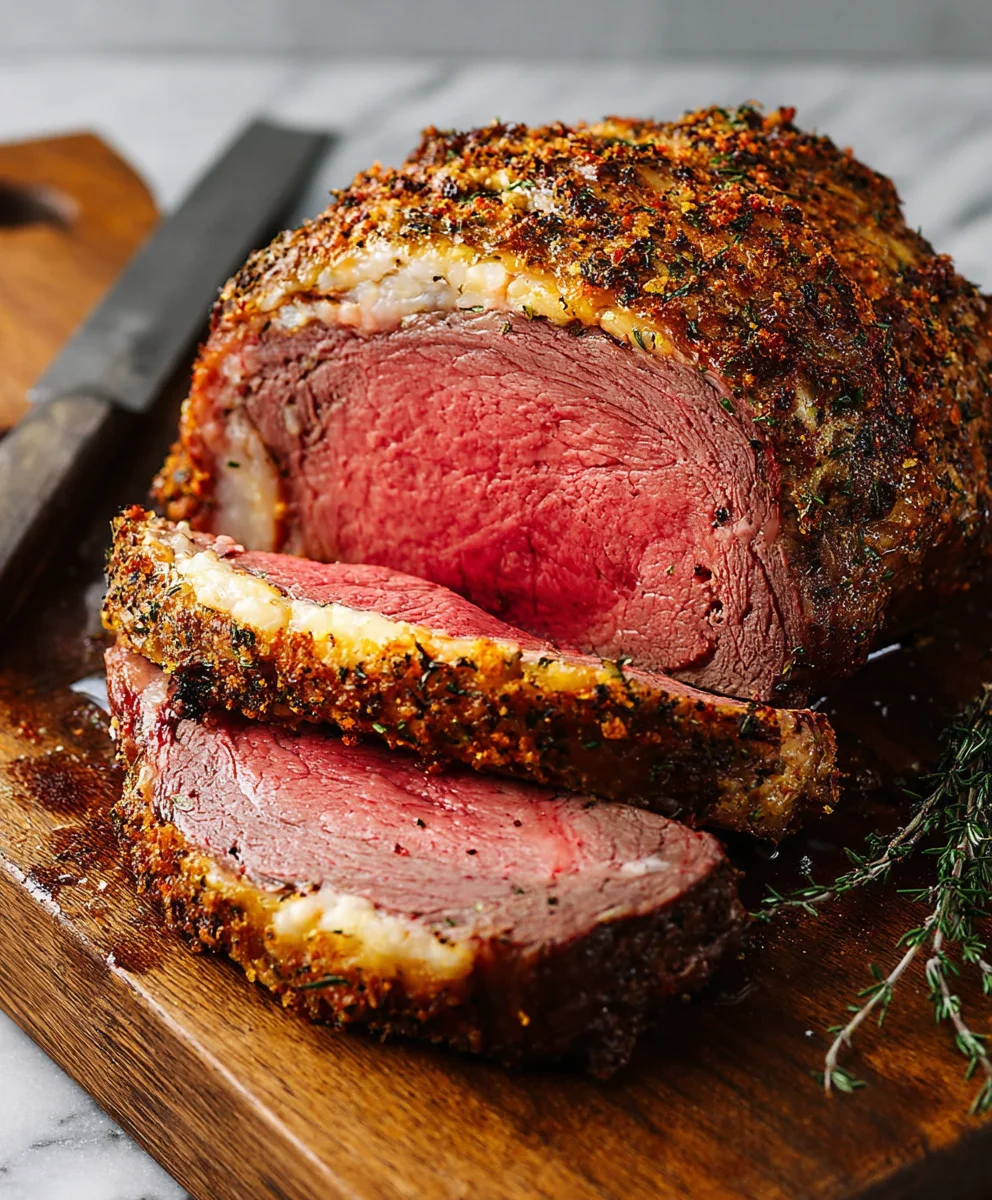
Best No-Fail Prime Rib (Garlic Herb Crust) is more than just a holiday centerpiece; it’s an experience. Imagine that moment when you carve into a perfectly roasted roast, revealing a tender, juicy interior kissed with a fragrant, savory crust that crackles ever so slightly. That’s the magic we’re conjuring today. People absolutely adore prime rib because it feels luxurious, celebratory, and surprisingly achievable with the right guidance. The secret to this particular rendition, the Best No-Fail Prime Rib (Garlic Herb Crust), lies in a simple yet foolproof method that guarantees tender, evenly cooked meat every single time, coupled with a sublime garlic and herb mixture that elevates it from delicious to unforgettable. Get ready to impress your loved ones and treat yourself to a truly magnificent meal.
Ingredients:
- 6 pounds prime rib (bone-in, with bones cut off and tied back on)
- ½ cup butter (softened)
- 6 garlic cloves (minced)
- 1 tablespoon kosher salt
- 1 teaspoon finely chopped fresh thyme
- 1 teaspoon finely chopped fresh rosemary
- 1 teaspoon black pepper
- 1 onion (quartered (if making the red wine au jus))
- ¼ cup drippings from prime rib pan (make sure to separate the fat from the drippings)
- 2 cups beef broth
- 1 ½ cups red wine
- Optional: 1 tablespoon cornstarch or arrowroot powder (in a slurry) to thicken
Preparation and Roasting
Step 1: Bring the Prime Rib to Room Temperature and Prepare the Herb Butter
This is arguably the most crucial step for achieving a tender and evenly cooked prime rib. Take your 6-pound bone-in prime rib out of the refrigerator at least 3-4 hours before you plan to cook it. This allows the meat to come up to a more even temperature, which will help it cook more uniformly from edge to center. While the roast is resting, prepare the glorious garlic herb butter. In a small bowl, combine the ½ cup of softened butter with the 6 minced garlic cloves, 1 tablespoon of kosher salt, 1 teaspoon of finely chopped fresh thyme, 1 teaspoon of finely chopped fresh rosemary, and 1 teaspoon of black pepper. Mix everything together thoroughly until you have a fragrant, cohesive paste. This butter will not only add incredible flavor but also help create a beautiful, flavorful crust.
Step 2: Season and Sear the Prime Rib
Once the prime rib has reached room temperature, pat it completely dry with paper towels. This is important for achieving a good sear. Generously rub the entire surface of the roast with the prepared garlic herb butter, making sure to get into all the nooks and crannies. Don’t be shy with the butter; it’s packed with flavor and will melt down to create a delicious coating. Preheat your oven to a high temperature, typically 450°F (230°C). Place the seasoned prime rib, fat side up, on a rack in a sturdy roasting pan. This initial high heat is essential for searing the outside of the roast, locking in juices and creating that sought-after crust. Roast at this high temperature for 15 minutes.
Step 3: Reduce Heat and Continue Roasting
After the initial searing period at 450°F (230°C), reduce the oven temperature to 325°F (160°C). This slower, gentler heat will cook the interior of the prime rib to your desired doneness without overcooking the exterior. Continue roasting, allowing approximately 12-15 minutes per pound for medium-rare (an internal temperature of 120-125°F or 49-52°C), 15-18 minutes per pound for medium (130-135°F or 54-57°C), and longer for more well-done roasts. It’s highly recommended to use a meat thermometer inserted into the thickest part of the roast, avoiding any bone, to ensure accurate cooking. For a 6-pound roast aiming for medium-rare, this could be anywhere from 1.5 to 2 hours of total cooking time after the initial sear.
Step 4: Rest the Prime Rib
This is another critical step that many overlook, but it’s absolutely vital for a juicy prime rib. Once your prime rib reaches its target internal temperature, remove it from the oven and transfer it to a cutting board. Tent it loosely with aluminum foil and let it rest for at least 20-30 minutes, or even up to 45 minutes for a roast this size. During this resting period, the juices within the meat, which have been pushed to the center by the heat, will redistribute throughout the roast. If you slice it too soon, all those delicious juices will run out onto the cutting board, leaving you with a drier piece of meat. This resting period allows the meat to become incredibly tender and moist.
Making the Red Wine Au Jus
Step 5: Prepare the Red Wine Au Jus
While your prime rib is resting, you can prepare a simple yet elegant red wine au jus to serve alongside. Carefully pour off most of the fat from the roasting pan, leaving about ¼ cup of the flavorful drippings behind in the pan. Place the roasting pan over medium heat on your stovetop. Add the 1 quartered onion to the pan and sauté for a few minutes until it starts to soften and release its aroma, scraping up any browned bits from the bottom of the pan. Pour in the 1 ½ cups of red wine and bring it to a simmer, allowing it to cook down and reduce by about half, which will concentrate its flavor. Next, add the 2 cups of beef broth and bring the mixture back to a gentle simmer. Let it simmer for about 10-15 minutes, allowing the flavors to meld. If you prefer a thicker au jus, this is where you can add your optional slurry. In a small bowl, whisk together the 1 tablespoon of cornstarch or arrowroot powder with 2 tablespoons of cold water until smooth. Gradually whisk this slurry into the simmering au jus and continue to cook, stirring constantly, until the liquid thickens to your desired consistency. Strain the au jus through a fine-mesh sieve into a gravy boat, discarding the solids. Season with a little more salt and pepper to taste if needed.
This recipe for the Best No-Fail Prime Rib (Garlic Herb Crust) will impress your guests and become a family favorite for any special occasion. The combination of the tender, perfectly cooked beef and the flavorful crust, served with a rich red wine au jus, is simply irresistible.
Conclusion:
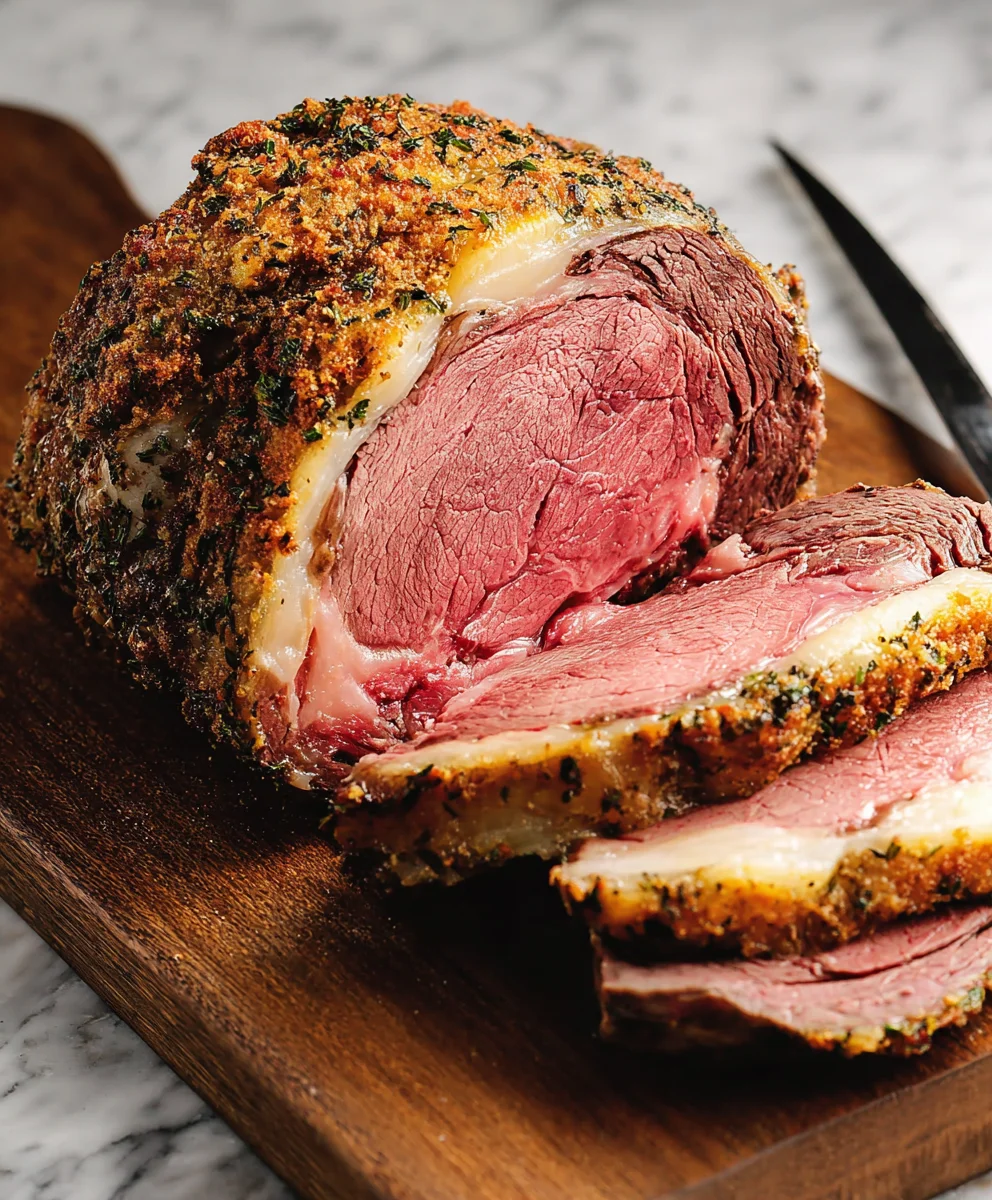
You’ve now mastered the art of creating the Best No-Fail Prime Rib (Garlic Herb Crust)! This recipe delivers a succulent, tender roast with a deeply flavorful, aromatic crust that’s sure to impress. Remember, the key to perfection lies in allowing the roast to come to room temperature before cooking and using a meat thermometer for precise doneness. Don’t be intimidated; this method is designed for success, even for novice cooks.
For a truly memorable meal, serve your prime rib with classic accompaniments like creamy mashed potatoes, roasted asparagus, or a rich red wine reduction. A dollop of horseradish sauce is also a delightful addition. Feel free to experiment with different herb combinations for your crust – rosemary and thyme are fantastic, but sage or marjoram can also add wonderful depth. You can even add a pinch of smoked paprika for an extra layer of flavor.
I encourage you to try this Best No-Fail Prime Rib recipe for your next special occasion. The joy of presenting a perfectly cooked prime rib, knowing you made it yourself, is incredibly rewarding. Enjoy every delicious bite!
Frequently Asked Questions:
Can I prepare the garlic herb crust ahead of time?
Yes, absolutely! You can mix your garlic herb crust ingredients together a day in advance and store them in an airtight container in the refrigerator. This saves you time on the day of cooking. Just bring it to room temperature for a few minutes before applying it to the roast.
What if my prime rib is too rare or too well-done?
The most common reason for over or undercooking is inaccurate temperature measurement or not accounting for carryover cooking. Always use a reliable meat thermometer inserted into the thickest part of the roast, avoiding bone. Remember to let the roast rest for at least 20-30 minutes after removing it from the oven; the internal temperature will continue to rise by 5-10 degrees during this resting period.
Garlic Herb Crust Prime Rib – Best No-Fail Roast
A no-fail recipe for a tender, juicy prime rib roast with a flavorful garlic herb crust and a rich red wine au jus.
Ingredients
-
6 pounds prime rib (bone-in, with bones cut off and tied back on)
-
½ cup butter (softened)
-
6 garlic cloves (minced)
-
1 tablespoon kosher salt
-
1 teaspoon finely chopped fresh thyme
-
1 teaspoon finely chopped fresh rosemary
-
1 teaspoon black pepper
-
1 onion (quartered (if making the red wine au jus))
-
¼ cup drippings from prime rib pan (separated fat)
-
2 cups beef broth
-
1 ½ cups non-alcoholic red wine alternative
-
Optional: 1 tablespoon cornstarch or arrowroot powder (in a slurry)
Instructions
-
Step 1
Bring the prime rib to room temperature for 3-4 hours before cooking. In a small bowl, combine softened butter, minced garlic, kosher salt, fresh thyme, fresh rosemary, and black pepper to create the herb butter. -
Step 2
Pat the prime rib dry and generously rub the entire surface with the garlic herb butter. Preheat oven to 450°F (230°C). Place the roast, fat side up, on a rack in a roasting pan and sear for 15 minutes. -
Step 3
Reduce oven temperature to 325°F (160°C). Continue roasting for approximately 12-15 minutes per pound for medium-rare (120-125°F internal temperature), 15-18 minutes per pound for medium (130-135°F internal temperature). Use a meat thermometer for accuracy. -
Step 4
Remove the prime rib from the oven when it reaches the desired internal temperature. Tent loosely with aluminum foil and let it rest for at least 20-30 minutes to allow juices to redistribute. -
Step 5
While the roast rests, make the au jus. Pour off most of the fat from the roasting pan, leaving about ¼ cup drippings. Sauté the quartered onion in the pan drippings over medium heat. Add the non-alcoholic red wine alternative and simmer until reduced by half. Add beef broth and simmer for 10-15 minutes. Thicken with optional cornstarch slurry if desired. Strain into a gravy boat and season.
Important Information
Nutrition Facts (Per Serving)
It is important to consider this information as approximate and not to use it as definitive health advice.
Allergy Information
Please check ingredients for potential allergens and consult a health professional if in doubt.
Leave a Comment