
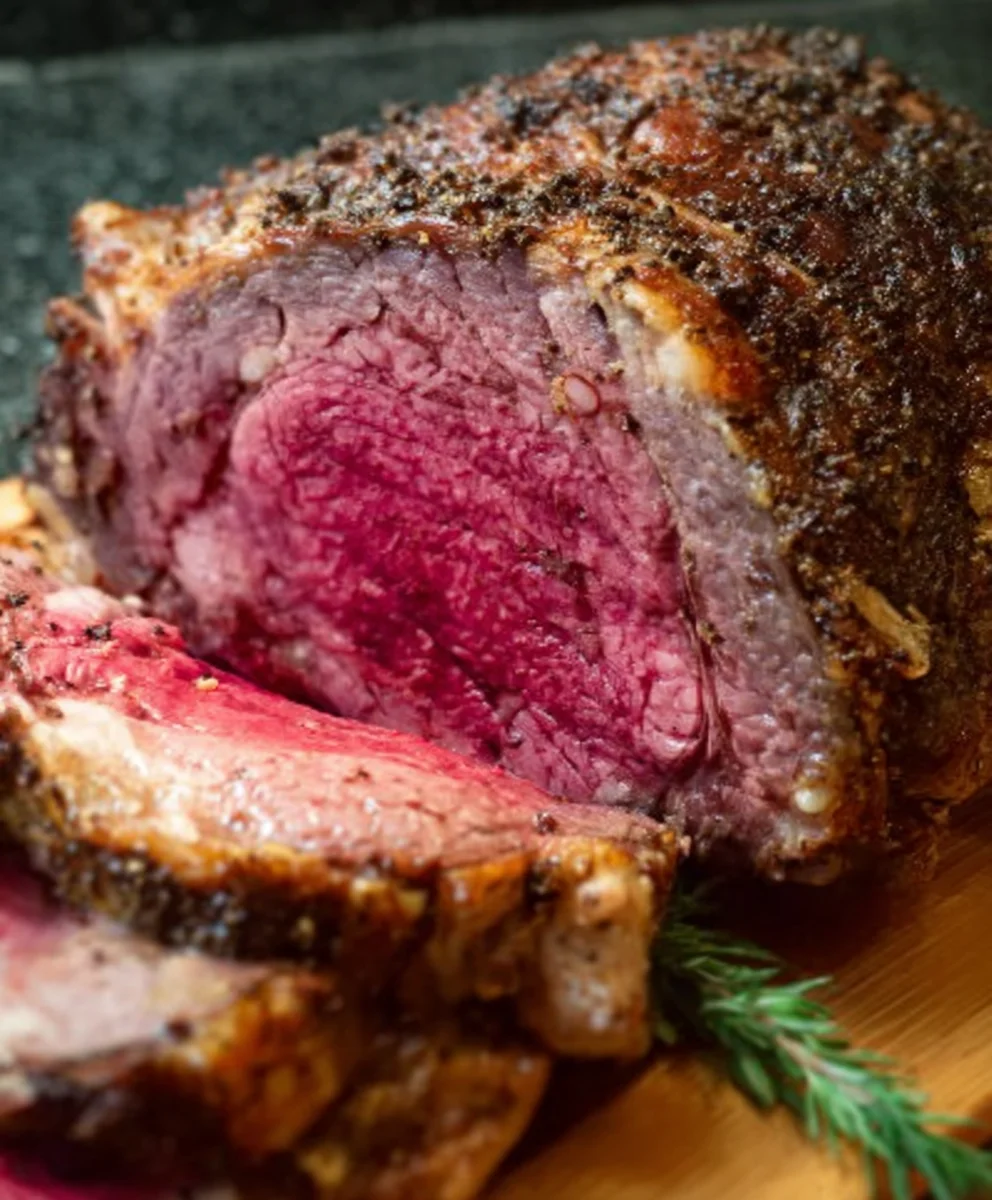
Perfect Medium Rare Oven Roasted Prime Rib isn’t just a meal; it’s an event. Imagine sinking your fork into a slice of impossibly tender, ruby-red beef, its rich, savory juices cascading down the side. This is the stuff of holiday feasts, celebratory dinners, and those moments when you want to truly impress. People adore this classic for its luxurious texture, its deep, satisfying flavor that speaks of quality ingredients and expert preparation. What truly elevates a Perfect Medium Rare Oven Roasted Prime Rib from good to unforgettable is the delicate balance of a beautifully seared exterior giving way to a meltingly soft, perfectly cooked interior. Mastering this technique means you can recreate restaurant-quality indulgence in your own home, guaranteeing rave reviews and happy sighs all around your table.
Ingredients:
- butter (enough to smear over entire roast)
- sea salt (to taste)
- black pepper (freshly ground, to taste)
- 3 tablespoons garlic clove (minced)
- 4 pound boneless ribeye roast (at room temperature)
Prepping the Roast for Perfection
The key to a truly spectacular oven-roasted prime rib, especially one cooked to that coveted medium-rare state, begins long before it even hits the oven. First and foremost, ensure your 4-pound boneless ribeye roast is at room temperature. This is absolutely crucial. Pull it out of the refrigerator at least 2 to 3 hours before you plan to cook it. A cold roast will cook unevenly, resulting in a grey band around the edges and a potentially overcooked interior, which is the opposite of what we’re aiming for with a Perfect Medium Rare Oven Roasted Prime Rib. As the roast comes to temperature, it will cook more evenly and efficiently.
While your roast is happily warming up, let’s prepare our flavorful rub. In a small bowl, combine the minced garlic. We’re using 3 tablespoons of minced garlic, which might seem like a lot, but trust me, it infuses the meat with an incredible aroma and savory depth without being overpowering, especially when roasted. To this, we’ll add a generous amount of freshly ground black pepper. Don’t be shy with the pepper; it complements the richness of the beef beautifully. And of course, we’ll season liberally with sea salt. I always say, season as if you were seasoning a steak, but you have a larger surface area and a more substantial cut of meat. This initial seasoning is foundational to the overall flavor profile.
Now, for the binding agent and extra richness: butter. You’ll need enough butter to smear over the entire roast. Softened butter works best here, making it easy to spread. Take your softened butter and, using your hands or a spatula, coat the entire surface of the ribeye roast. This butter not only adds a layer of flavor but also helps the garlic and seasoning adhere beautifully to the meat. Think of it as creating a flavorful crust. Once the roast is thoroughly coated in butter, press your garlic and seasoning mixture all over it, ensuring it’s evenly distributed on all sides, including the ends. Gently pat it in so it adheres well.
The Searing and Roasting Process
Now that our roast is prepped and ready, it’s time to get it into a hot oven. We’ll start by searing the roast at a high temperature to develop a gorgeous, caramelized crust. Preheat your oven to 450 degrees Fahrenheit (230 degrees Celsius). Place the seasoned roast, fat-side up, on a sturdy roasting rack set inside a roasting pan. This elevated position allows for even heat circulation around the meat. Carefully place the pan into the preheated oven. We will roast it at this high temperature for 15 minutes. This initial blast of heat is vital for achieving that beautiful, browned exterior that seals in the juices and contributes significantly to the flavor and texture of your Perfect Medium Rare Oven Roasted Prime Rib.
After 15 minutes at 450 degrees Fahrenheit, it’s time to reduce the oven temperature significantly to allow the interior to cook gently and evenly to your desired doneness. Lower the oven temperature to 325 degrees Fahrenheit (160 degrees Celsius). Do not open the oven door unnecessarily during this stage, as each opening can cause a significant drop in temperature. Continue roasting at 325 degrees Fahrenheit. The total cooking time will vary depending on the size of your roast and your oven’s calibration, but a general guideline for a 4-pound roast aiming for medium-rare is approximately 15-18 minutes per pound. This means for a 4-pound roast, you’re looking at roughly 60-72 minutes of additional cooking time after reducing the temperature.
Achieving the Perfect Medium-Rare
The most critical part of achieving a Perfect Medium Rare Oven Roasted Prime Rib is monitoring the internal temperature. For medium-rare, we are aiming for an internal temperature of 130-135 degrees Fahrenheit (54-57 degrees Celsius). Invest in a good instant-read meat thermometer; it’s your best friend for perfectly cooked roasts. Start checking the temperature about 45 minutes into the reduced cooking time. Insert the thermometer into the thickest part of the roast, being careful to avoid any bones (though this is a boneless roast, so you just need to find the thickest part of the meat).
As the roast approaches the target temperature, check it more frequently, perhaps every 10-15 minutes. Remember, the temperature will continue to rise a few degrees as the roast rests (this is called carryover cooking), so you want to pull it out of the oven when it’s about 5 degrees Fahrenheit below your final desired temperature. For medium-rare, this means removing it from the oven when it registers 130 degrees Fahrenheit. This slight under-shooting is intentional and leads to a perfectly cooked center once rested.
The All-Important Resting Period
Once your Perfect Medium Rare Oven Roasted Prime Rib reaches its target internal temperature (around 130 degrees Fahrenheit), carefully remove the roasting pan from the oven. Transfer the roast to a clean cutting board. Do not skip this step – the resting period is just as crucial as the cooking time. Tent the roast loosely with aluminum foil. This traps in the heat and allows the juices to redistribute throughout the meat. If you cut into the roast immediately, all those delicious juices will run out onto the cutting board, leaving you with a drier, less flavorful piece of meat.
Allow the roast to rest for at least 20 to 30 minutes. For a 4-pound roast, 30 minutes is ideal. During this time, the internal temperature will rise an additional 5-10 degrees Fahrenheit, bringing it to the perfect medium-rare range of 135-140 degrees Fahrenheit. The fibers in the meat will relax, making it incredibly tender and juicy. While the roast is resting, you can use this time to make any accompanying gravy or sides. Once the resting period is complete, you are ready to carve and serve your magnificent Perfect Medium Rare Oven Roasted Prime Rib. Slice it against the grain for maximum tenderness, and enjoy the fruits of your labor!
Conclusion:
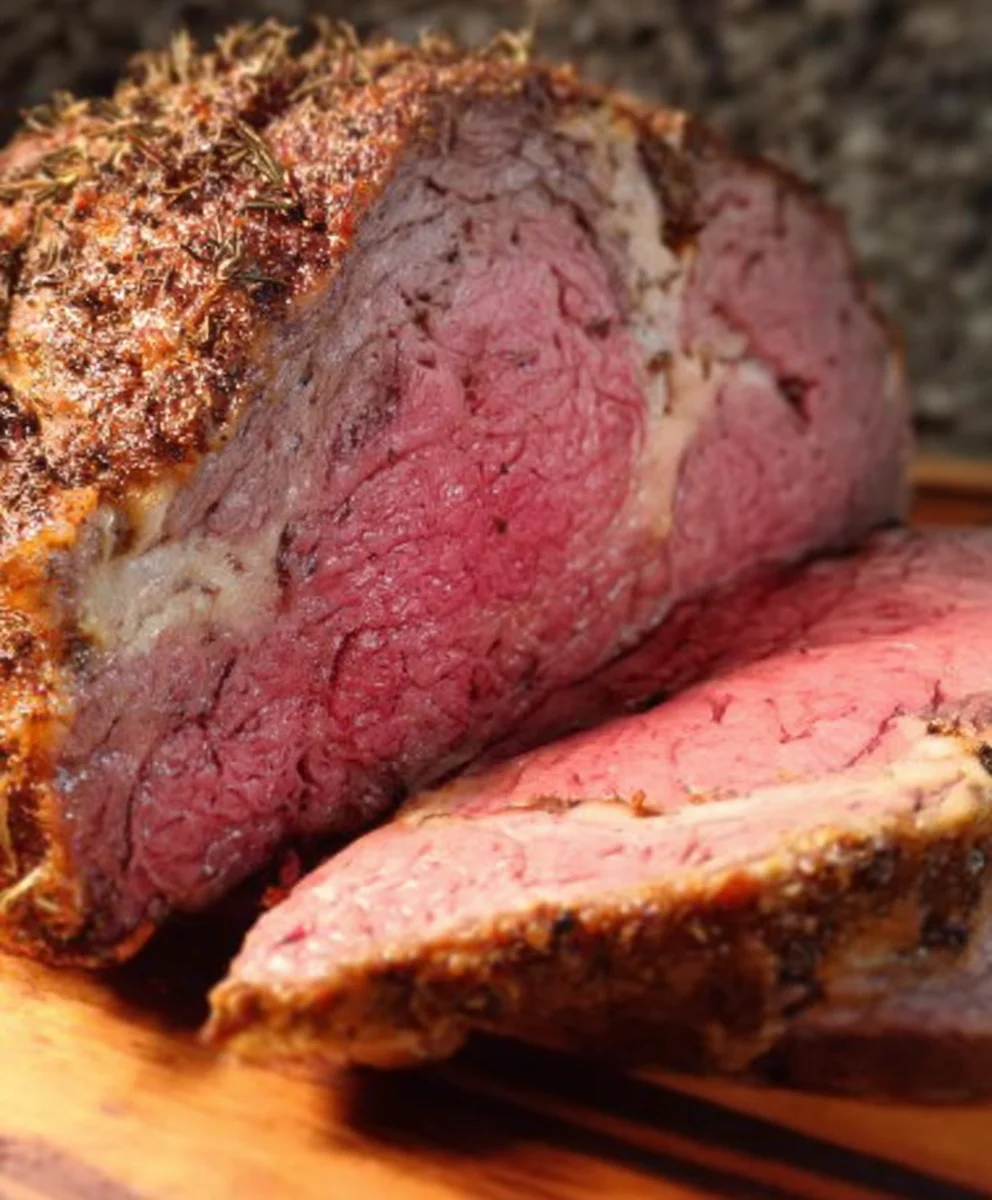
And there you have it – your guide to achieving the truly spectacular Perfect Medium Rare Oven Roasted Prime Rib! This recipe, when followed closely, promises a succulent, juicy roast with a beautifully seared exterior and that coveted rosy pink center. It’s a dish that truly elevates any occasion, from a holiday feast to a special weekend dinner. Don’t be intimidated by its impressive appearance; the simplicity of the core method allows the quality of the prime rib to shine through.
I love serving this prime rib alongside classic roast potatoes, a rich gravy made from the pan drippings, and a vibrant horseradish cream. For a lighter touch, consider a fresh asparagus or green bean side. Don’t shy away from experimenting with seasonings! A touch of rosemary and thyme is classic, but you could also try a garlic and herb butter rub, or even a bold blackening spice for a different flavor profile.
The key is patience and trusting your thermometer. Remember, resting the meat is crucial for those juices to redistribute, ensuring every slice is a delight. I encourage you to try this recipe and experience the joy of creating a truly memorable meal. You’ll be a prime rib pro in no time!
FAQs:
Can I use a different cut of beef instead of prime rib?
While this recipe is specifically tailored for prime rib (a large, bone-in rib roast), you can adapt the temperatures and times for other thick cuts like a ribeye roast or a tenderloin. However, the results will vary, and you’ll need to closely monitor the internal temperature for your desired doneness.
My prime rib isn’t coming out as tender as I’d like. What am I doing wrong?
Tenderness in prime rib is influenced by the quality of the cut itself and proper cooking. Ensure you are using a well-marbled piece of prime rib. Overcooking is another common culprit; using an instant-read thermometer is the best way to guarantee you hit that perfect medium-rare. Also, make sure to let the roast rest properly after cooking!
Perfect Medium Rare Oven Roasted Prime Rib Recipe
A foolproof recipe for achieving a perfectly medium-rare, tender, and juicy oven-roasted prime rib with a flavorful garlic-butter crust.
Ingredients
-
4 pound boneless ribeye roast (at room temperature)
-
butter (enough to smear over entire roast)
-
sea salt (to taste)
-
black pepper (freshly ground, to taste)
-
3 tablespoons garlic clove (minced)
Instructions
-
Step 1
Ensure your 4-pound boneless ribeye roast is at room temperature by pulling it out of the refrigerator at least 2 to 3 hours before cooking. While warming, combine minced garlic, freshly ground black pepper, and sea salt in a small bowl. -
Step 2
Smear softened butter all over the entire surface of the roast. This helps the seasoning adhere and adds richness. Press the prepared garlic and seasoning mixture evenly onto the buttered roast, ensuring all sides and ends are coated. -
Step 3
Preheat your oven to 450 degrees Fahrenheit (230 degrees Celsius). Place the seasoned roast, fat-side up, on a roasting rack set inside a roasting pan. Roast for 15 minutes at this high temperature to sear the exterior. -
Step 4
Reduce the oven temperature to 325 degrees Fahrenheit (160 degrees Celsius). Continue roasting for approximately 15-18 minutes per pound (about 60-72 minutes for a 4-pound roast) until the internal temperature reaches 130 degrees Fahrenheit (54 degrees Celsius) in the thickest part. -
Step 5
Remove the roast from the oven when it registers 130 degrees Fahrenheit and transfer it to a clean cutting board. Tent loosely with aluminum foil and let it rest for at least 20-30 minutes. This allows the juices to redistribute, resulting in a tender and juicy roast. -
Step 6
Slice the rested prime rib against the grain for maximum tenderness and serve immediately. The internal temperature should reach 135-140 degrees Fahrenheit (57-60 degrees Celsius) after resting.
Important Information
Nutrition Facts (Per Serving)
It is important to consider this information as approximate and not to use it as definitive health advice.
Allergy Information
Please check ingredients for potential allergens and consult a health professional if in doubt.

Leave a Comment