
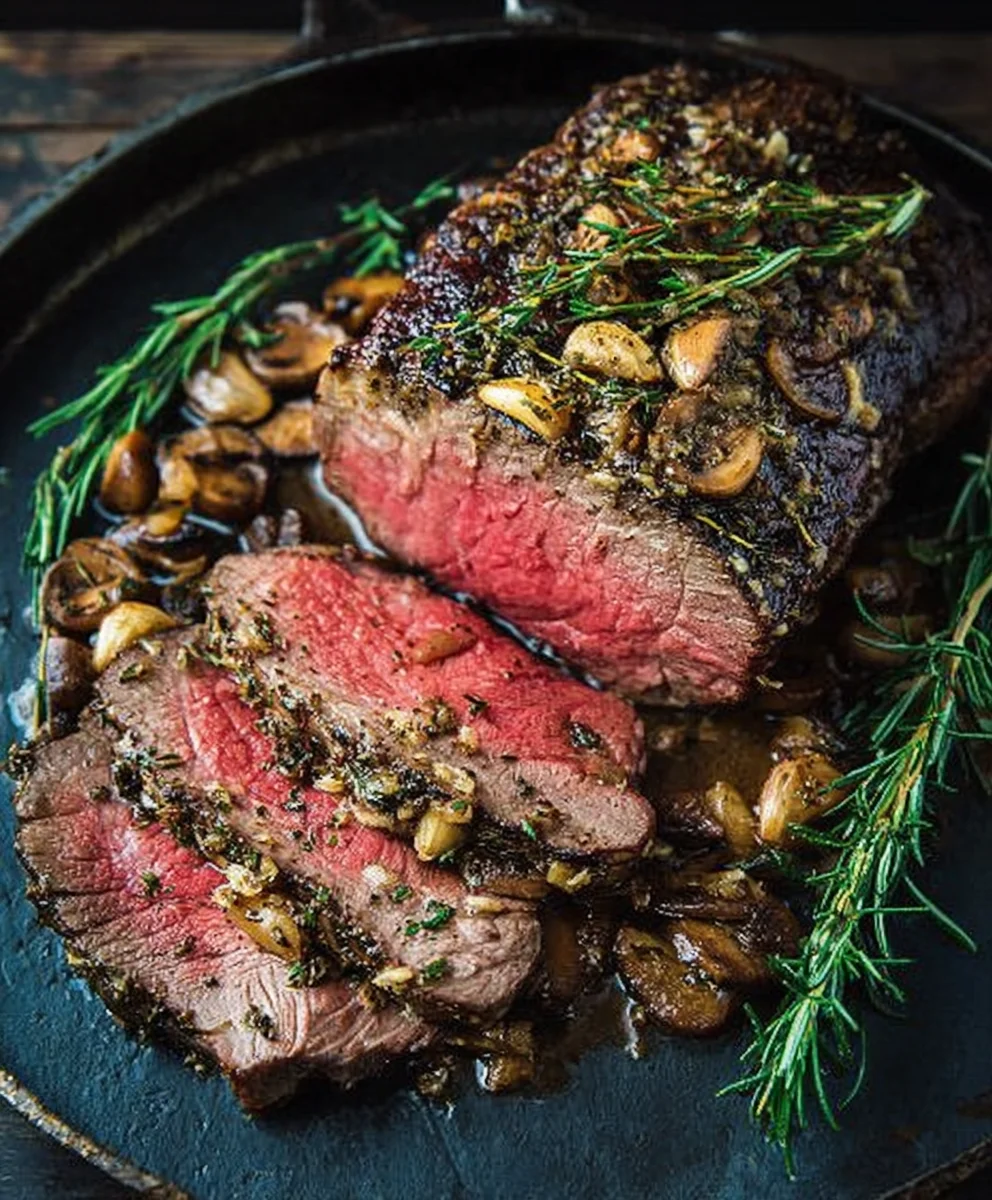
Rosemary and Garlic Roast Beef isn’t just a meal; it’s an experience. Imagin extracte the aroma filling your kitchen, a comforting symphony of earthy rosemary and pungent garlic, heralding the arrival of a truly spectacular centerpiece. This isn’t your average Sunday roast. It’s the kind of dish that makes guests ooh and aah, the kind that becomes the star of holiday tables and cherished family gatherings. People adore it for its incredible depth of flavor, the way the beef becomes impossibly tender and juicy, infused with those classic, irresistible herbaceous and aromatic notes. What truly sets our Rosemary and Garlic Roast Beef apart is the perfect balance we achieve – a crust that’s beautifully caramelized, yielding to a succulent, melt-in-your-mouth interior, all thanks to a simple yet masterful preparation that brings out the best in this magnificent cut of meat.
Ingredients:
- 3 pounds boneless Rib Eye roast
- ¼ cup chopped fresh rosemary
- ¼ cup chopped garlic (about 20 cloves)
- Salt and freshly ground black pepper to taste
- 2 tablespoons olive oil
- 2 tablespoons vegetable oil
- 4 tablespoons unsalted butter, divided
- 4 cups a variety of mushrooms, sliced to about the same size
- 1 cup beef stock (or chicken stock)
Preparation for Roasting
The first step to achieving a perfect Rosemary and Garlic Roast Beef is to prepare your roast. Take the 3-pound boneless Rib Eye roast out of the refrigerator at least 1 hour, and ideally 2 hours, before you plan to cook it. This is crucial for even cooking; a cold roast will cook unevenly, resulting in a tougher exterior and potentially undercooked center. Pat the roast completely dry with paper towels. This step is essential for creating a beautiful, flavorful crust. Moisture on the surface will steam the meat rather than sear it.
Next, it’s time to season generously. In a small bowl, combine the chopped fresh rosemary and the chopped garlic. You’ll want to ensure the garlic is finely chopped; if you have a garlic press, this is a great time to use it. In a separate small bowl, combine the salt and freshly ground black pepper. Season the entire surface of the rib eye roast liberally with this salt and pepper mixture, rubbing it in gently to ensure it adheres. Then, spread the rosemary and garlic mixture all over the seasoned roast, pressing it onto the meat so it sticks well. This herbaceous and pungent coating will infuse the beef with incredible flavor as it roasts.
Heat your heavy-bottomed oven-safe skillet or roasting pan over medium-high heat. Add the 2 tablespoons of olive oil and 2 tablespoons of vegetable oil. Let the oils heat up until they are shimmering but not smoking. Carefully place the seasoned roast into the hot skillet. Sear the roast on all sides until a deep brown crust forms, which should take about 2-3 minutes per side. Don’t overcrowd the pan; if your skillet isn’t large enough to accommodate the roast comfortably without touching the sides, sear it in batches. This searing process is vital for developing that rich, caramelized flavor and a wonderfully crisp exterior. Once seared, remove the roast from the skillet and set it aside on a clean plate.
Roasting the Beef
Preheat your oven to 400°F (200°C). This initial high heat helps to set the crust you’ve just created. Place the seared roast back into the oven-safe skillet or on a clean roasting rack. For a medium-rare roast (internal temperature of 130-135°F or 54-57°C), aim for approximately 15-20 minutes per pound. For a medium roast (135-140°F or 57-60°C), increase the cooking time slightly. A 3-pound roast will likely take between 45 and 60 minutes.
Resting and Gravy Preparation
Once the roast reaches your desired internal temperature (use a meat thermometer inserted into the thickest part of the roast, avoiding bone if there were any), carefully remove it from the oven. Transfer the roast to a clean cutting board and tent it loosely with aluminum foil. Let the roast rest for at least 15-20 minutes. This resting period is non-negotiable; it allows the juices to redistribute throughout the meat, resulting in a more tender and moist roast. If you cut into it too soon, all those delicious juices will run out onto the board.
While the roast is resting, you can prepare a simple yet flavorful pan gravy. Carefully pour off any excess fat from the skillet used for searing, leaving behind the flavorful browned bits and drippings. Place the skillet over medium heat on the stovetop. Add 2 tablespoons of the unsalted butter to the skillet. Once melted, add the sliced variety of mushrooms to the pan. Sauté the mushrooms, stirring occasionally, until they are softened and nicely browned, which should take about 5-7 minutes. This step adds another layer of earthy flavor to the gravy.
Add the remaining 2 tablespoons of unsalted butter to the skillet with the mushrooms. Once melted, slowly whisk in the 1 cup of beef stock. Scrape the bottom of the skillet with your whisk or a wooden spoon to deglaze, incorporating all those delicious browned bits into the sauce. Bring the gravy to a simmer and let it cook for about 5-10 minutes, or until it has thickened to your desired consistency. You can season the gravy with a little more salt and pepper if needed, keeping in mind the roast is already well-seasoned. If you prefer a smoother gravy, you can strain it before serving, but many enjoy the texture of the mushrooms.
Serving Your Rosemary and Garlic Roast Beef
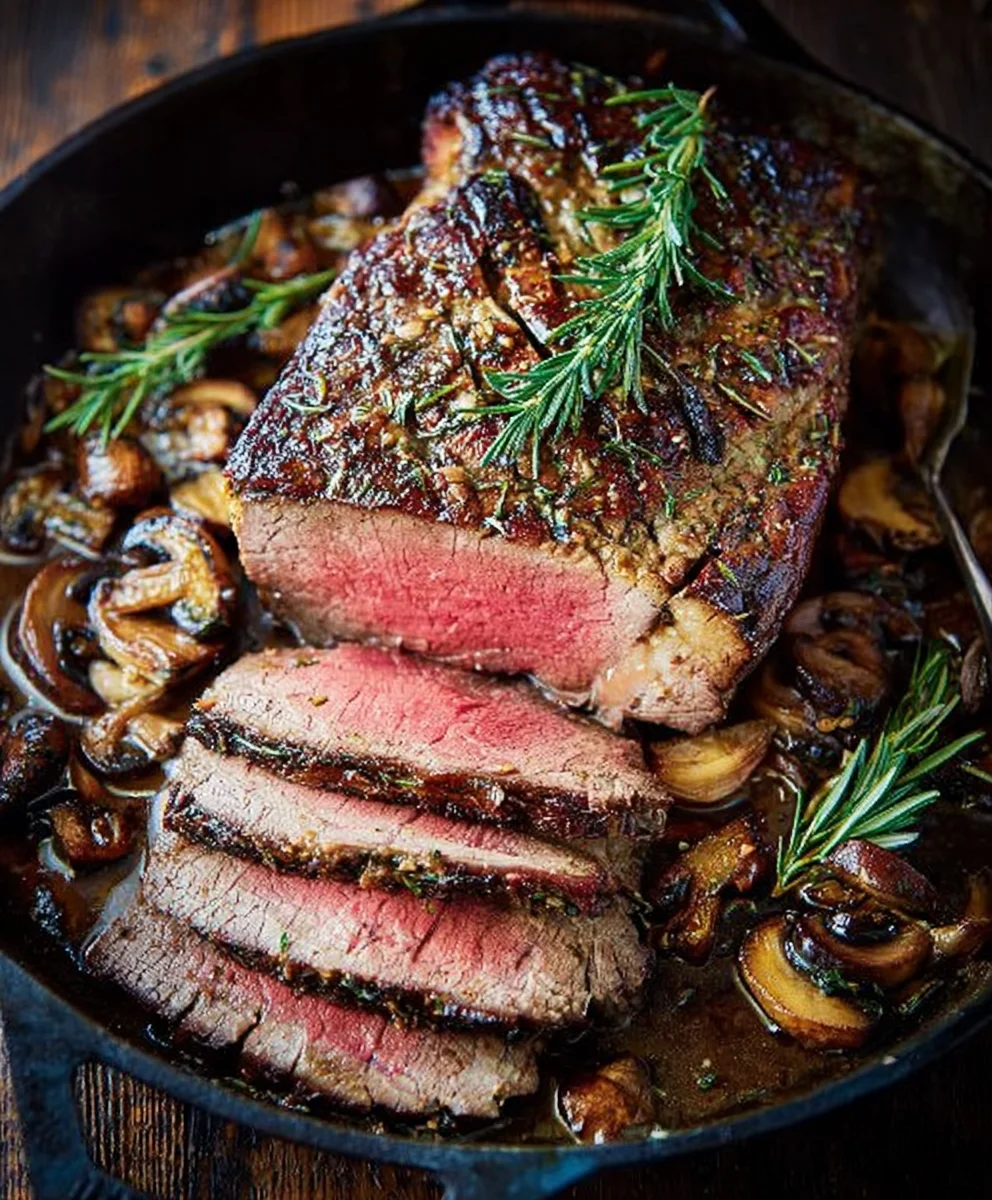
After resting, slice the Rosemary and Garlic Roast Beef against the grain into your desired thickness. This technique helps to break up the muscle fibers, making each slice incredibly tender. Arrange the sliced roast beef on a serving platter. Spoon the warm mushroom gravy generously over the slices of beef. This Rosemary and Garlic Roast Beef is a showstopper and pairs beautifully with a variety of side dishes, such as roasted potatoes, mashed potatoes, or steamed green beans. The aromatic rosemary and pungent garlic, combined with the rich beef, create an unforgettable culinary experience.
Conclusion:
There you have it – your guide to creating a truly unforgettable Rosemary and Garlic Roast Beef! This recipe is a testament to the power of simple, quality ingredients working in harmony to create something truly special. The fragrant rosemary and pungent garlic infuse the tender beef with incredible depth of flavor, making every bite a delight. We hope you enjoyed learning how to master this classic dish. Remember, cooking should be an enjoyable process, so don’t be afraid to experiment and make it your own!
This Rosemary and Garlic Roast Beef is incredibly versatile. For a classic Sunday dinner, serve it with creamy mashed potatoes, roasted root vegetables like carrots and parsnips, and a rich gravy. For a more casual gathering, consider slicing it thinly and serving it on crusty bread with a horseradish cream sauce for delicious sandwiches. It’s also fantastic served cold the next day!
Don’t shy away from making this recipe your own. You can add other herbs like thyme or sage alongside the rosemary for an even more complex aromatic profile. If you don’t have fresh garlic, you can use roasted garlic cloves for a sweeter, milder flavor. Feel free to adjust the amount of garlic and rosemary to your personal preference.
Frequently Asked Questions:
What cut of beef is best for Rosemary and Garlic Roast Beef?
For the best results, we recommend using a prime rib roast (also known as a standing rib roast) or a sirloin tip roast. These cuts are tender and have good marbling, which contributes to a juicy and flavorful roast. Ensure the beef is at room temperature before roasting for even cooking.
How can I ensure my Rosemary and Garlic Roast Beef is cooked to the perfect temperature?
Using a meat thermometer is crucial! Insert it into the thickest part of the roast, away from the bone. For medium-rare, aim for an internal temperature of 130-135°F (54-57°C). For medium, aim for 135-140°F (57-60°C). Remember to let the roast rest for at least 15-20 minutes after removing it from the oven, as the temperature will continue to rise a few degrees during this resting period.
Can I make this Rosemary and Garlic Roast Beef ahead of time?
Yes, you can. You can prepare the herb and garlic rub a day in advance and refrigerate it with the beef. For serving, you can roast the beef and then refrigerate it once it has cooled. To reheat, place it in a covered ovenproof dish with a little beef broth or water and warm it gently at a low temperature (around 250°F or 120°C) until heated through. Carving it cold is also a delicious option!
Rosemary Garlic Roast Beef
An easy and delicious recipe for Rosemary Garlic Roast Beef, perfect for a flavorful dinner.
Ingredients
-
3 pounds boneless Rib Eye roast
-
1/4 cup chopped fresh rosemary
-
1/4 cup chopped garlic (about 20 cloves)
-
Salt and freshly ground black pepper to taste
-
2 tablespoons olive oil
-
2 tablespoons vegetable oil
-
4 tablespoons unsalted butter, divided
-
4 cups a variety of mushrooms, sliced
-
1 cup beef stock
Instructions
-
Step 1
Take the roast out of the refrigerator at least 1-2 hours before cooking. Pat it dry with paper towels. -
Step 2
Combine chopped rosemary and garlic in a bowl. Season the roast with salt and pepper, then coat generously with the rosemary-garlic mixture. -
Step 3
Heat olive oil and vegetable oil in a skillet over medium-high heat. Sear the roast on all sides until a deep brown crust forms. -
Step 4
Preheat oven to 400°F (200°C). Place the seared roast in the skillet or on a roasting rack and roast for approximately 15-20 minutes per pound for medium-rare. -
Step 5
Remove the roast from the oven when it reaches the desired internal temperature, tent loosely with foil, and let rest for 15-20 minutes. -
Step 6
While the roast rests, pour off excess fat from the skillet. Melt 2 tablespoons of butter, add mushrooms, and sauté until browned. Add remaining 2 tablespoons of butter and whisk in beef stock. Simmer until thickened. -
Step 7
Slice the rested roast beef against the grain and serve with the mushroom gravy.
Important Information
Nutrition Facts (Per Serving)
It is important to consider this information as approximate and not to use it as definitive health advice.
Allergy Information
Please check ingredients for potential allergens and consult a health professional if in doubt.


Leave a Comment